Leica M lens buyer’s guide
Best Leica M Lenses
One compact lens is enough to start. I’d choose the 35mm Summicron for street photography, then build around what you actually shoot.
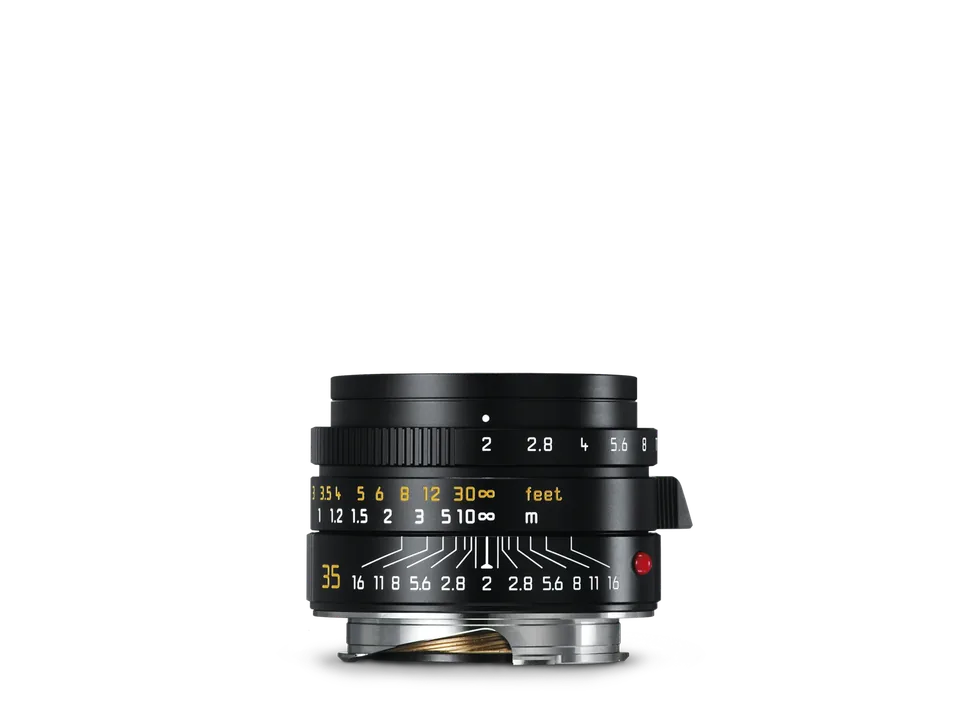
Pick #1: the one-lens Leica M setup
Leica Summicron-M 35mm f/2 ASPH.
Check price on Amazon →A compact 35mm lens for street, travel and documentary work. If I could own only one Leica M lens, this is where I would start.
Read whyThe shortlist
How I would choose a Leica M lens
A 28mm, 35mm and 50mm lens change how close you work and how much context enters the frame.
A compact lens preserves the reason many photographers choose an M camera in the first place.
The fastest lens is rarely the lightest or easiest to focus, so buy the aperture only when you need it.
Best all-round M lens
Leica Summicron-M 35mm f/2 ASPH.
- Best for
- Street, reportage, travel and one-lens M setups
- Skip it if
- You naturally see wider or want stronger subject isolation
- My verdict
- This is the first Leica M lens I would consider for a practical everyday kit.
A 35mm lens keeps enough environment in the frame for documentary work without feeling extremely wide. The compact f/2 design also makes more sense on an M body than carrying speed you rarely use.
Check price on Amazon →Best fast normal lens
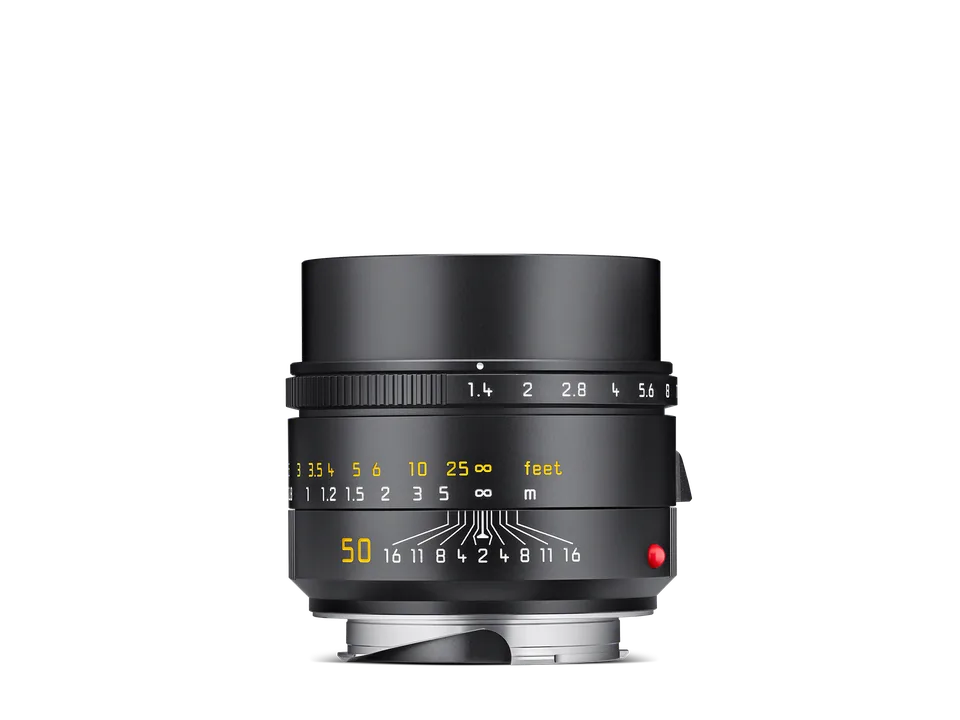
Leica Summilux-M 50mm f/1.4 ASPH.
- Best for
- Low light, portraits and photographers who prefer a normal field of view
- Skip it if
- You want the smallest lens or need more environmental context
- My verdict
- Choose the 50mm Summilux when speed and separation justify the extra size and price.
The current Summilux-M 50mm f/1.4 ASPH. version has 11 aperture blades, an integrated lens hood and a close-focus limit of 0.45m. Optical rangefinder focusing ends at 0.7m; the closer range requires Live View or an electronic viewfinder. Its f/1.4 aperture is useful for low light and subject separation, but careful focusing still matters.
Check price on Amazon →Best wide-angle M lens
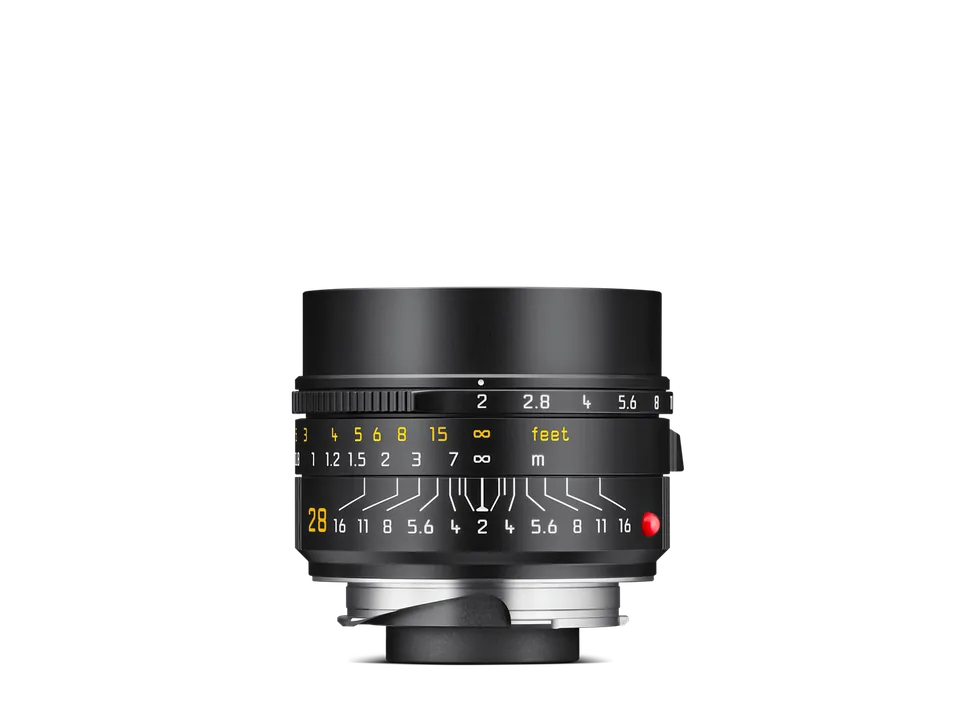
Leica Summicron-M 28mm f/2 ASPH.
- Best for
- Wide street scenes, travel, architecture and environmental portraits
- Skip it if
- You dislike working close or prefer a calmer, tighter frame
- My verdict
- The 28mm Summicron is the M lens for photographers who want the environment to remain part of the photograph.
The current Summicron-M 28mm f/2 ASPH. version adds an integrated hood and focusing down to 0.4m. The optical rangefinder couples only down to 0.7m, so closer photographs require Live View or an electronic viewfinder. Choose 28mm for scenes where the surroundings are a deliberate part of the picture.
Check price on Amazon →Best compact telephoto
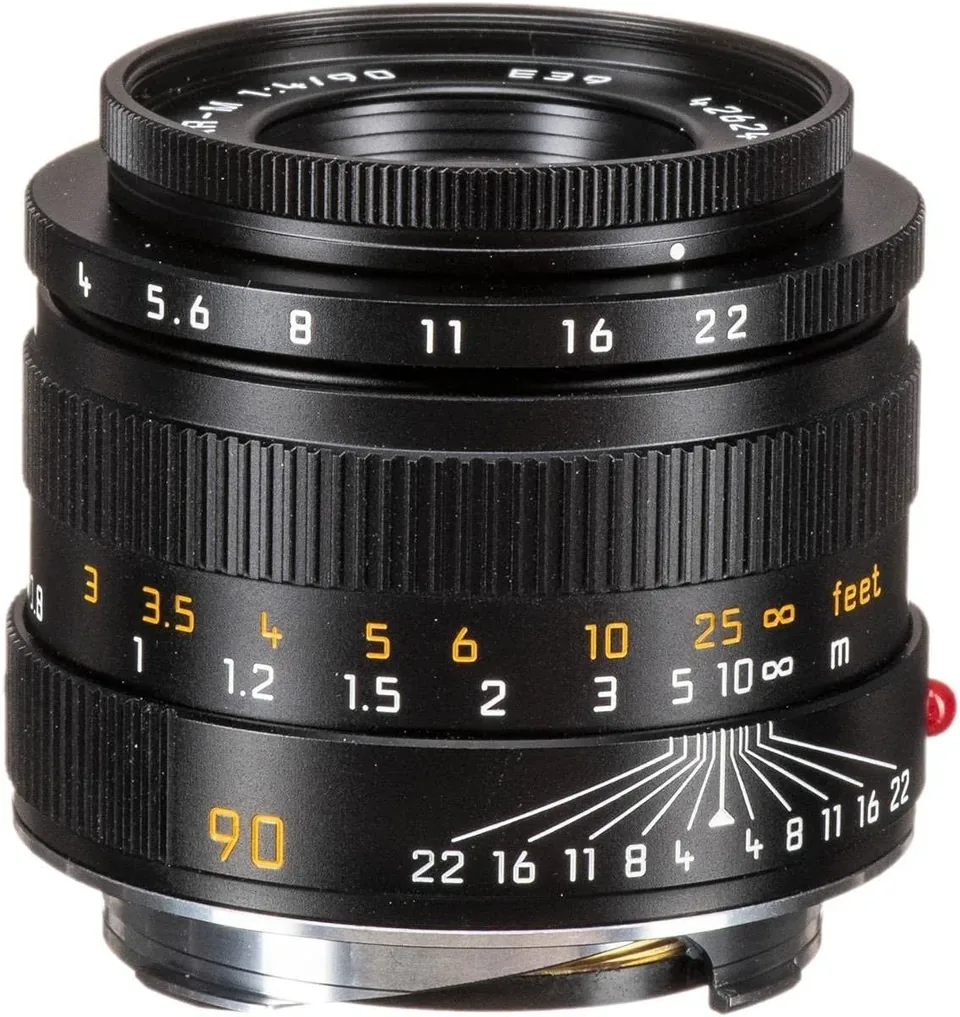
Leica Macro-Elmar-M 90mm f/4
- Best for
- Travel, details and occasional portraits with a compact telephoto
- Skip it if
- Low light or very shallow depth of field is the main reason you want 90mm
- My verdict
- The 90mm makes sense as a specialist addition after you already own a normal or wide M lens.
The collapsible Macro-Elmar-M 90mm f/4 adds a compact telephoto view. Its close-up capability needs the optional Macro-Adapter-M and a suitable Live View or electronic-viewfinder setup. It is not a one-to-one macro lens on its own, and focusing a 90mm lens accurately is less forgiving than using a wider M lens.
Check price on Amazon →The specialist choice
Leica Noctilux-M 50mm f/1.2 ASPH.
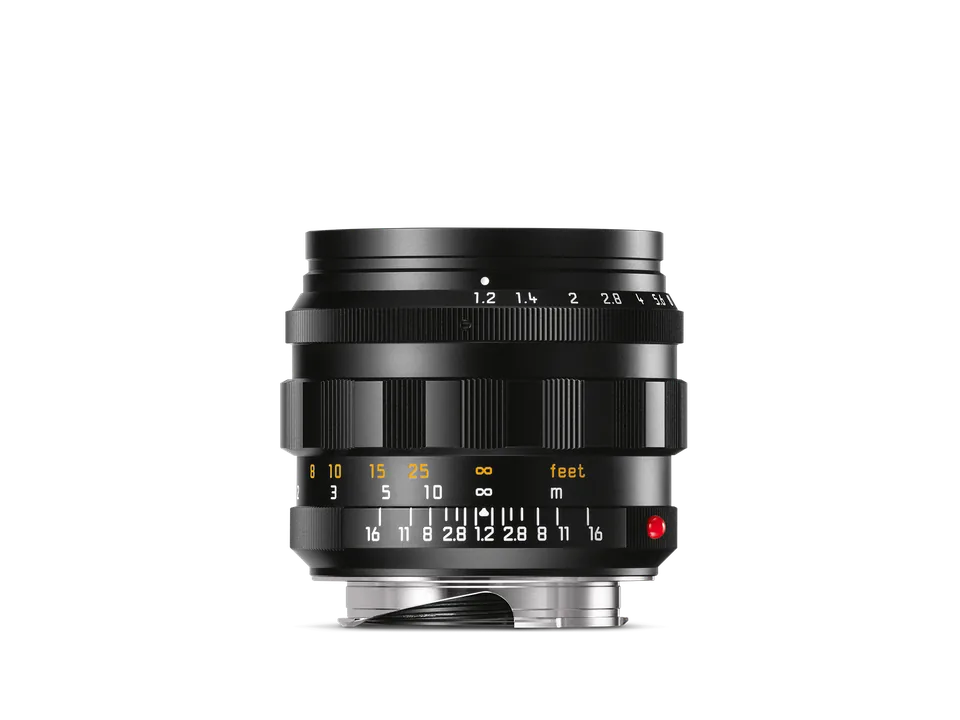
- Best for
- Photographers who specifically want the rendering of the compact f/1.2 Noctilux reissue
- Skip it if
- You value compact handling, easy focusing or sensible value
- My verdict
- This is a distinctive luxury lens, not the practical Leica M recommendation.
The Noctilux-M 50mm f/1.2 ASPH. is a current reissue of a distinctive lens design, with a 1m minimum focus distance. Its appeal is its rendering rather than versatility or value. The Summilux 50mm is the more practical low-light starting point for most photographers.
Check price on Amazon →Keep it simple
If I could only buy three Leica M lenses
Start with one field of view and add another only when your photographs repeatedly ask for it.
One lens
35mm Summicron
The most balanced single-lens choice for street, travel and everyday photography.
View Leica Summicron-M 35mm f/2 ASPH. at Amazon →Two lenses
35mm + 50mm
Keep the 35mm for context and add the faster 50mm for low light and tighter portraits.
View Leica Summilux-M 50mm f/1.4 ASPH. at Amazon →Three lenses
28mm + 35mm + 50mm
A wide, documentary and normal view without building an oversized M kit.
View Leica Summicron-M 28mm f/2 ASPH. at Amazon →The short answer
So, which Leica M lens should you buy?
- For street and everyday photography: Leica Summicron-M 35mm f/2 ASPH. Check price on Amazon →
- For low light and portraits: Leica Summilux-M 50mm f/1.4 ASPH. Check price on Amazon →
- For a wider documentary view: Leica Summicron-M 28mm f/2 ASPH. Check price on Amazon →
- For a compact telephoto: Leica Macro-Elmar-M 90mm f/4 Check price on Amazon →
- For the distinctive specialist option: Leica Noctilux-M 50mm f/1.2 ASPH. Check price on Amazon →
If I were building a Leica M kit from scratch, I would start with the 35mm Summicron. It keeps the camera compact, works for the kind of street and documentary photography that suits an M, and makes it easier to learn one field of view before adding another lens.
Next step
Compare the rest of the system
Compare camera systems
Continue with the other camera guides
Sony cameras
Compare current Sony bodies for hybrid work, high resolution, action and compact everyday use.
Compare Sony cameras →Fujifilm cameras
Compare Fuji bodies for street photography, travel, hybrid work and professional files.
Compare Fujifilm cameras →Fujifilm lenses
Choose the Fuji focal length and lens size that suit the way you actually photograph.
Compare Fujifilm lenses →Leica cameras
Compare fixed-lens, rangefinder, autofocus and film Leica camera experiences.
Compare Leica cameras →Sony lenses
Compare practical Sony E-mount lenses for street work, portraits, sports and macro.
Compare Sony lenses →