Fujifilm lens buyer’s guide
Best Fujifilm Lenses
One lens for portraits, everyday work and low light. Start here.
Pick #1: the one-lens Fuji setup
Fujinon XF 33mm f/1.4 R LM WR
Check current price →A fast, roughly 50mm-equivalent normal lens that handles portraits and everyday work. If I could own only one Fuji lens, this would be it.
See it →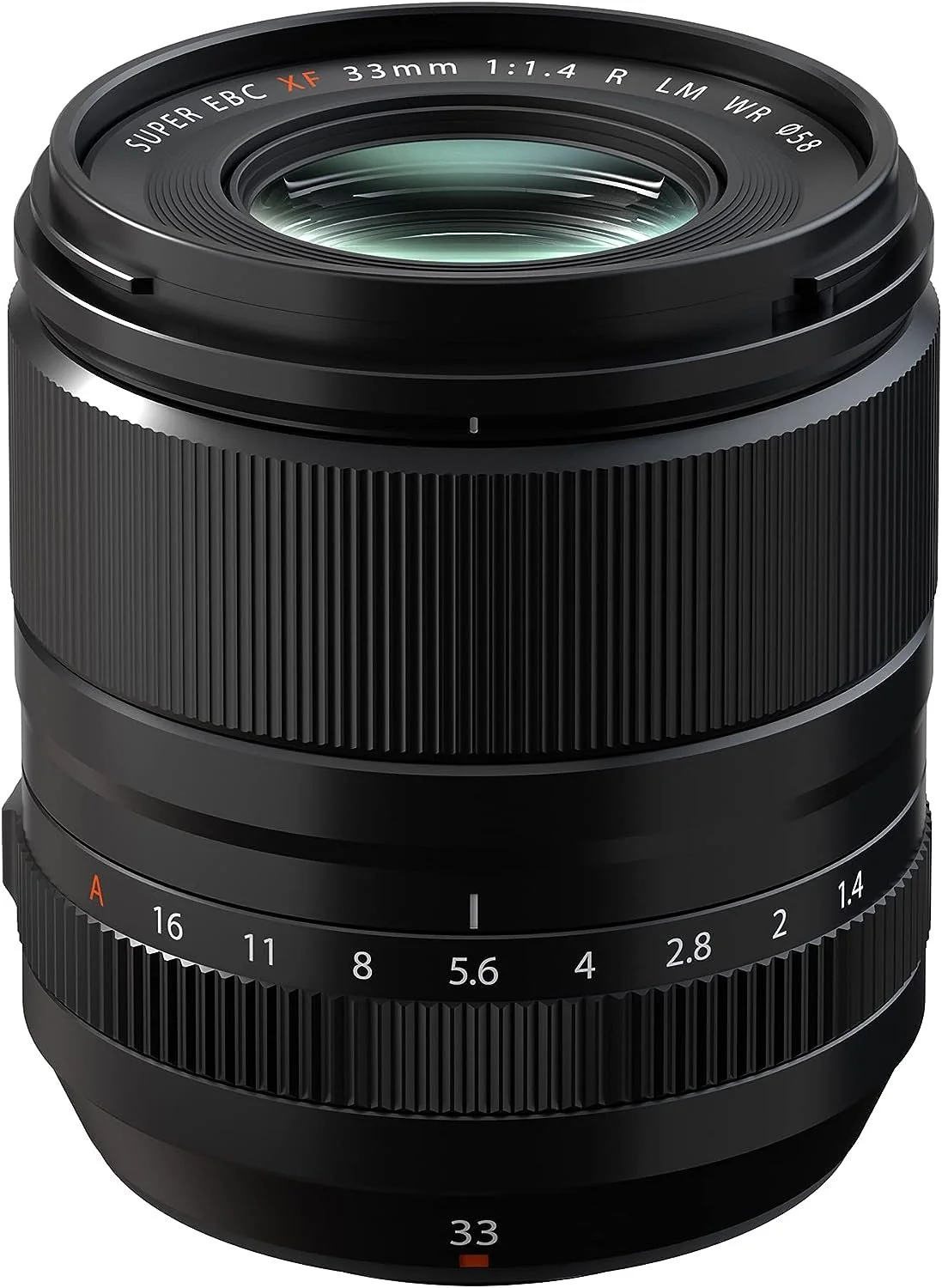
Why a normal lens works so well for street photography
The 33mm f/1.4 is my all-round Fuji recommendation. The roughly 50mm-equivalent view works for portraits and everyday photography, while the fast aperture makes it far more useful in low light. The 35mm f/2 remains the smaller, more affordable alternative.
The shortlist
How I chose these Fuji lenses
Each lens needs to solve a real photographic problem, not just look good on a spec sheet.
I value size, weather resistance, stabilisation and low-light performance when they change how I can work.
If two lenses do the same job, the one that is easier to take out and use usually wins.
Best all-round Fuji lens
Fujinon XF 33mm f/1.4 R LM WR
- Best for
- Everyday photography, portraits, low light and a one-lens Fuji kit
- Skip it if
- You need the smallest possible lens or usually prefer a wider field of view
- My verdict
- If I could own only one Fuji lens, this would be it. It is the normal lens that covers the most ground without feeling like a compromise.
On a Fuji APS-C body, 33mm gives a roughly 50mm-equivalent field of view. It works for portraits, everyday photographs and low light, with enough speed for real background separation when you want it. It is not the smallest Fuji prime, but it is the one I would choose when one lens has to do nearly everything.
Check price on Amazon →Best compact everyday Fuji lens
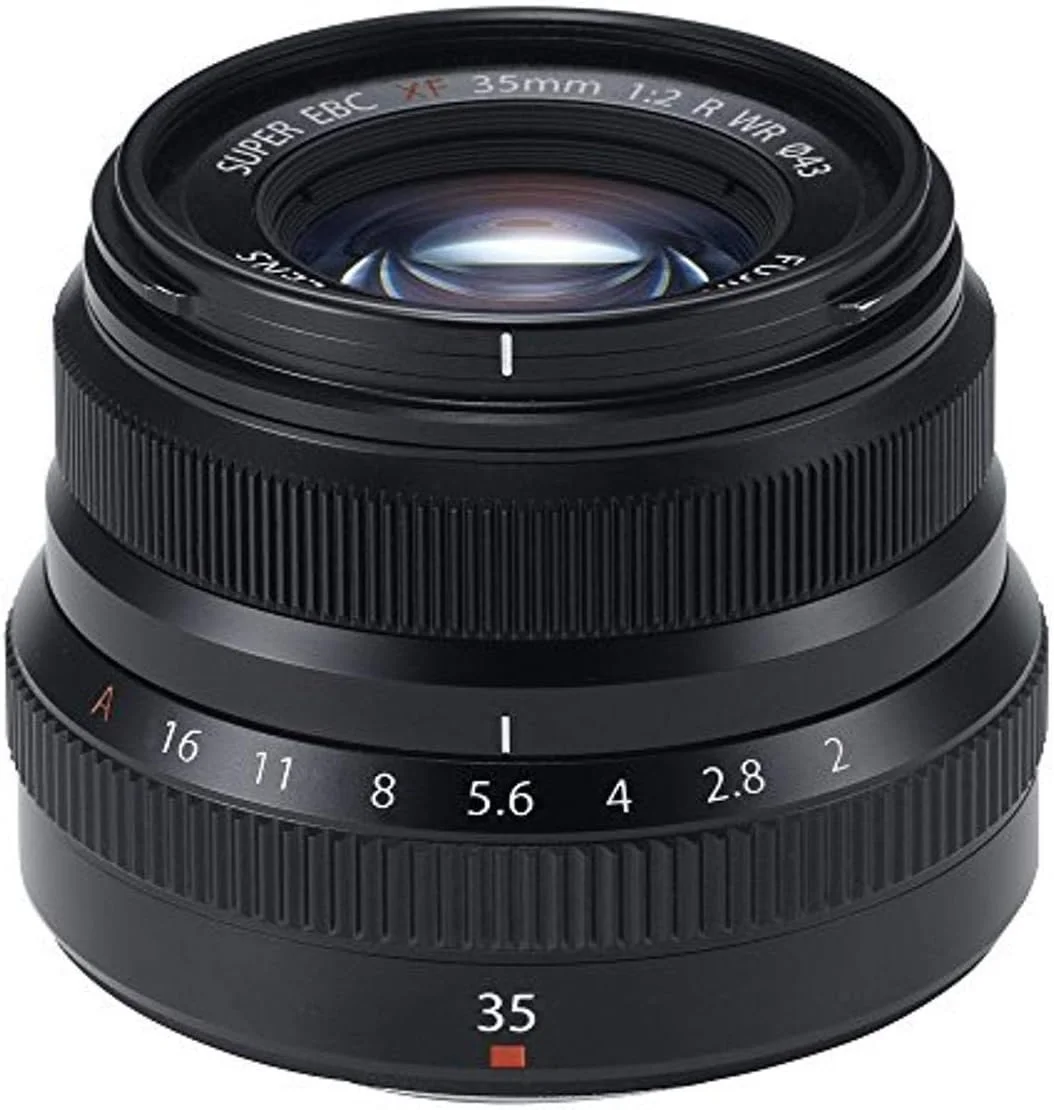
Fujinon XF 35mm f/2 R WR
- Best for
- Street photography, travel, everyday use and bad weather
- Skip it if
- You want the fastest low-light lens or the shallowest depth of field
- My verdict
- This is the practical first lens for most Fuji photographers. It is compact, weather-resistant and reasonably priced.
This is my go-to option when I want a small lens and I do not know what the weather will do. The field of view works for street photography without forcing every photograph into a dramatic wide or telephoto look.
Check price on Amazon →Best Fuji lens for portraits
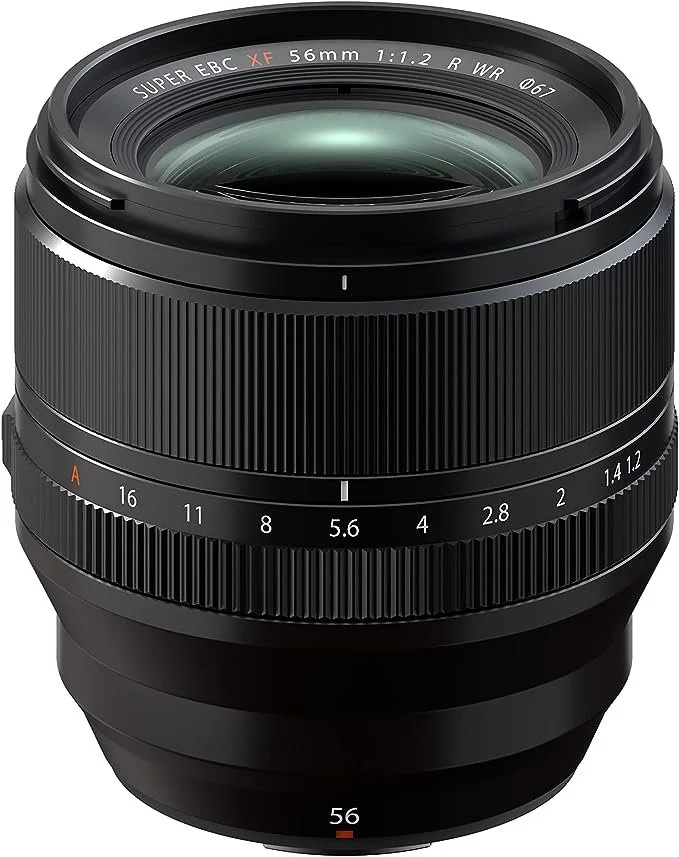
Fujinon XF 56mm f/1.2 R
- Best for
- Portraits, street portraits, low light and shallow depth of field
- Skip it if
- You mainly shoot wider street scenes or want one compact everyday lens
- My verdict
- This is the Fuji lens I choose when the photograph is about the person rather than the environment.
The 56mm is one of the most enjoyable Fuji lenses I have used. The focal length gives portraits separation, and the f/1.2 aperture is useful when the light drops. It is more specialised than the 35mm, which is exactly why it works so well for portraits.
Check price on Amazon →Best Fuji lens for travel and video
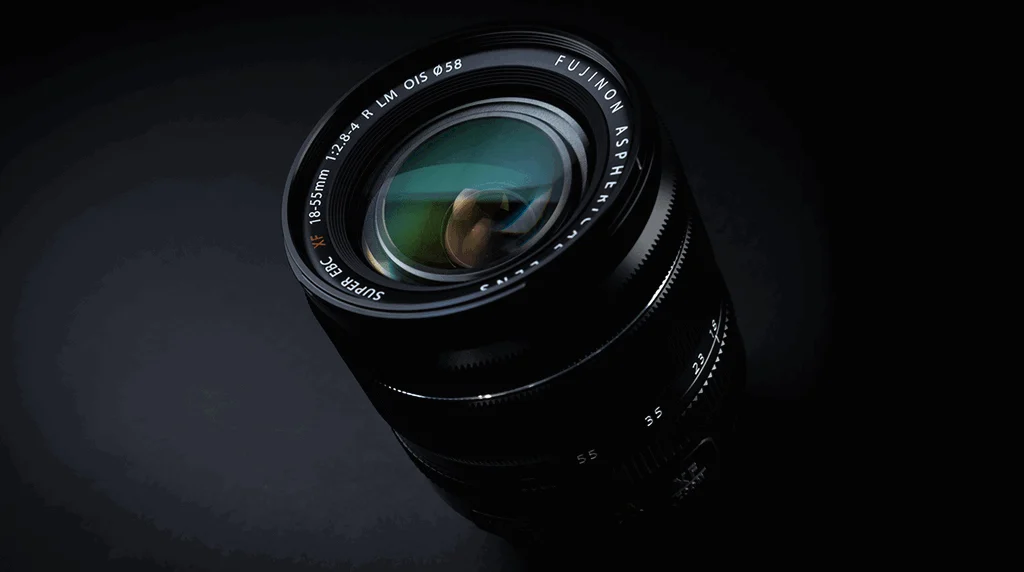
Fujinon XF 18–55mm f/2.8–4 R LM OIS
- Best for
- Travel, video, vlogging and carrying one lens
- Skip it if
- You prefer prime lenses or need strong subject separation in low light
- My verdict
- This is the sensible one-lens setup when flexibility and optical stabilisation matter more than a very wide aperture.
I used this zoom for street photography videos with the X-T3 because that camera does not have in-body stabilisation. It covers useful wide, normal and short-telephoto views without asking you to stop and change lenses.
Check price on Amazon →Best fast wide-angle Fuji lens
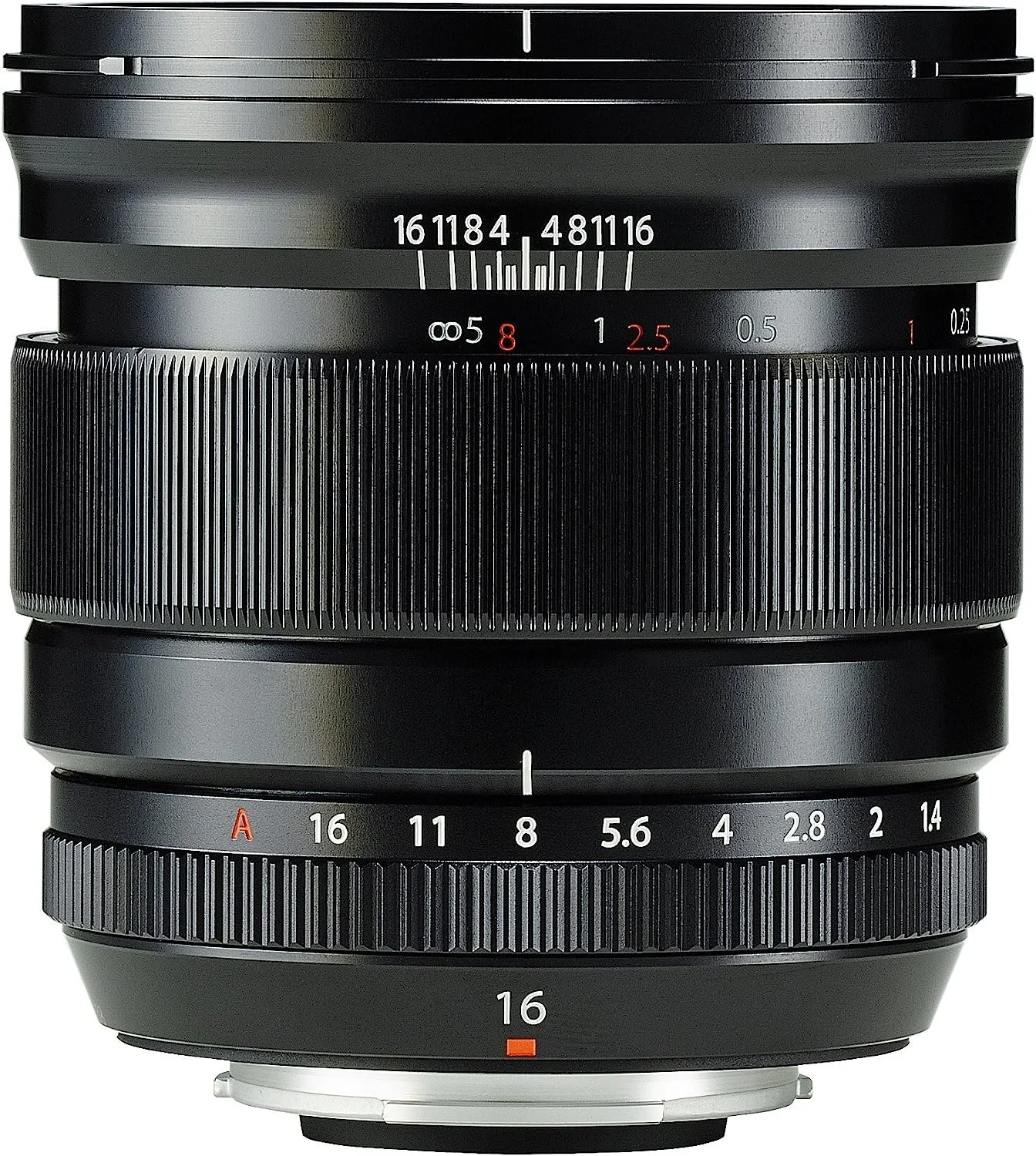
Fujinon XF 16mm f/1.4 R WR
- Best for
- Wide-angle street work, landscapes, architecture, nature and low light
- Skip it if
- You want a normal perspective or the flexibility of a zoom
- My verdict
- Choose this when you want a fast, weather-resistant wide prime that can also focus close.
The 16mm opens up photographs that are not possible with the normal lenses above. It is wide without being a slow specialist lens, and the f/1.4 aperture keeps it useful for handheld work after dark.
Check price on Amazon →Best Fuji lens for landscapes and architecture
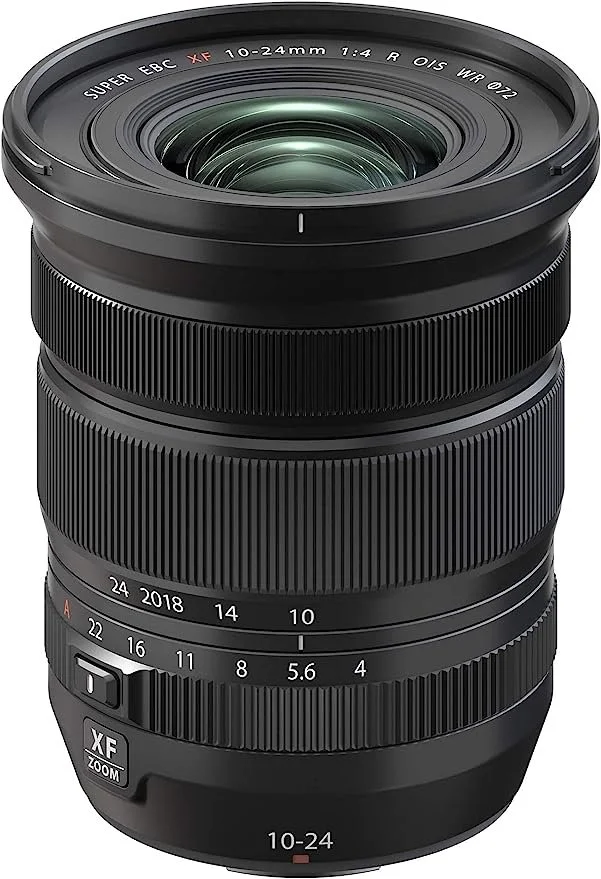
Fujinon XF 10–24mm f/4 OIS
- Best for
- Landscapes, architecture, interiors and cityscapes
- Skip it if
- You want a compact prime or regularly shoot moving subjects in low light
- My verdict
- This is the flexible ultra-wide option. The zoom range is the reason to choose it over the 16mm prime.
The 10–24mm gives landscape and architecture photographers far more control over framing than a single wide focal length. Optical stabilisation helps when shooting handheld, although it matters less if you already work from a tripod.
Check price on Amazon →Fujifilm prime lenses or a zoom?
Fujifilm prime lenses have one focal length. Choose one when you know the perspective you like, want a wide maximum aperture, or want a simpler kit. A zoom is useful when you need to change framing quickly without changing lenses.
The 33mm f/1.4 suits a normal field of view; the 35mm f/2 trades some light-gathering ability for a smaller kit. The 18–55mm zoom gives you more framing options for travel and everyday work. A prime is not automatically sharper or better: choose the individual lens for the photographs you make.
Which wide-angle lens makes sense?
The XF 16mm f/1.4 gives a 24mm-equivalent field of view on Fujifilm APS-C cameras. Its wide aperture suits low light and its close focusing is useful for foreground details. See the 16mm f/1.4 field review for photographs made with it.
The XF 10–24mm f/4 covers roughly 15–36mm equivalent, making it more flexible for interiors and landscapes. At f/4 it gathers less light than the 16mm at f/1.4. Stabilisation can help with camera shake, but it cannot freeze a moving person.
These are X-mount lenses for compatible interchangeable-lens bodies. They do not attach to the fixed-lens X100 series. Use the Fujifilm camera guide to check the kind of system you want.
Keep it simple
If I could only buy three Fuji lenses
Start with one lens and add another only when you know what the first one is stopping you from photographing.
One lens
XF 33mm f/1.4 R LM WR
This is the Fuji lens I would choose if I could own only one: a fast, roughly 50mm-equivalent normal lens for portraits and everyday work.
Check current price on Amazon →Two lenses
XF 33mm f/1.4 + XF 56mm f/1.2
Add the 56mm when portraits and low-light subject separation matter.
Check current price on Amazon →Three lenses
XF 33mm f/1.4 + XF 56mm f/1.2 + XF 18–55mm
Add the zoom for travel, video and the days when changing lenses would get in the way.
Check current price on Amazon →The short answer
So, which Fuji lens should you buy?
- If you want one lens: XF 33mm f/1.4 R LM WR Check price →
- Street photography: XF 35mm f/2 R WR Check price →
- Portraits: XF 56mm f/1.2 R Check price →
- Travel and versatility: XF 18–55mm f/2.8–4 Check price →
- Fast wide-angle photography: XF 16mm f/1.4 R WR Check price →
- Landscapes and architecture: XF 10–24mm f/4 OIS Check price →
If I were building the most practical Fuji kit from scratch, I would start with the 33mm f/1.4 and add another lens only when I knew exactly what my photography was missing. It is the one I would keep for portraits, everyday work and low light if I had to make a one-lens kit.
Next step
Need a camera too?
Compare camera systems
Continue with the other camera guides
A camera body, lens mount and working focal length belong to the same decision. Use these guides to compare the alternatives before committing to a system.
Fujifilm cameras
Compare Fuji bodies for street photography, travel, hybrid work and professional files.
Compare Fujifilm cameras →Leica cameras
Compare fixed-lens, rangefinder, autofocus and film Leica camera experiences.
Compare Leica cameras →Leica M lenses
See which Leica M focal lengths make sense before building an expensive rangefinder kit.
Compare Leica M lenses →Sony lenses
Compare practical Sony E-mount lenses for street work, portraits, sports and macro.
Compare Sony lenses →